To an out-of-state buyer, a building's loan history can feel like reassurance. Northpointe Bank's James Mahieu explains why it isn't, and what changes for loan applications dated on or after January 4, 2027.
 By James Mahieu, Senior Loan Officer, Northpointe Bank · NMLS #199879 · Edited by Richard Roy, Publisher · 12 min read
Key takeaways
- Fannie Mae retired its 50% investor-concentration limit for investment-property loans in established projects reviewed under Full Review.
- The Waiver of Project Review now covers new and established condo projects of ten units or fewer (5–10-unit projects can't be part of a master association or larger development).
- New and newly converted attached condo projects in Florida no longer have to go through Fannie Mae's PERS review.
- For Full Review loans with applications dated on or after January 4, 2027, reserves must be at least 15% of the association's annual budgeted assessment income, up from 10%.
- Condotels, buildings needing critical repairs, certain litigation, and projects that don't meet Fannie Mae's insurance requirements remain ineligible.
In this article
- Why a Condo Loan Is Really Two Approvals
- Warrantable, Non-Warrantable — and Why Many Banks Walk Away
- The Rule That Used to Knock Out Vacation-Market Condos
- The Condotel Line Hasn't Moved
- Small Buildings Just Got Easier
- Florida's Extra Step Is Gone
- The Tightening: Reserves Go From 10% to 15%
- Reserve Studies Now Have to Be Funded, Not Just Filed
- Insurance: More Flexibility, Clearer Obligations
- What Still Makes a Condo Ineligible
- Where DSCR Loans Fit
- The Lender Who Sits in the Board Meetings
- Before You Make an Offer
When you buy a house, its history works in your favor. It was financed for the last owner, so you rarely think twice about whether it can be financed again.
It’s an easy assumption to carry south to a vacation condo. Realtors may even hear it at showings: the last unit closed with a conventional loan, so the building must be fine.
James Mahieu is a Senior Loan Officer at Northpointe Bank with 17 years in mortgage lending. He finances condos along Florida’s Gulf Coast, and the date he points to is January 4, 2027.
For Full Review loans with applications dated on or after that day, Fannie Mae will require at least 15% of a condo association’s annual budgeted assessment income to go to reserves, up from 10%. An adequately funded reserve study can be used instead.
His read on what happens next: “I think, come January of ’27, we’re going to see condos that used to be warrantable that will now be non-warrantable, simply because they just don’t have that reserve balance.”
Nothing in the unit you toured has to change for that to happen. Fannie Mae ties these rules to your loan application date, not the last buyer’s.
That is the catch in a year when much of the news sounds good for vacation-market investors. Some of Fannie Mae’s 2026 changes open doors. Others raise the bar, and James is clear about where the pressure is landing: “They’re really putting a lot more emphasis on the HOA’s reserves.”
Why the last sale settles less than it seems to comes down to how a condo loan is built.
Why a Condo Loan Is Really Two Approvals
Most buyers think a mortgage is about them: their income, their credit, their down payment. With a condo, that’s only half the file.
“With a condo, we’re not only underwriting the borrower and the individual unit, we also have to look at the condominium project itself,” James explains. That means the homeowners association’s financial health, its reserves, its insurance, any deferred maintenance, who owns the units, and how the property actually operates day to day.
In other words, a buyer with perfect credit can still be turned down because of the building. And a building that looked fine last year can fall out of eligibility because of a budget decision made by a board the buyer has never met.
That is why condos are “a significant part of the business I do,” James says. He lives in Florida, and realtors in other coastal markets such as Myrtle Beach send him condo buyers “because I’ve got such a wide variety of options to do all the different condos that are out there.”
Warrantable, Non-Warrantable — and Why Many Banks Walk Away
The industry shorthand for whether a building passes is “warrantable” or “non-warrantable.” Fannie Mae’s own language is “eligible” or “ineligible,” but the idea is the same.
“If it’s warrantable, that means that you can get a regular Fannie Mae-backed conventional mortgage on the property,” James says. “Whereas if it’s non-warrantable, Fannie Mae says they will not lend on that.”
That has real consequences for buyers. “You can’t just go to any bank and get a conventional loan on a non-warrantable condo. A lot of banks don’t even want to touch them,” he says. Without that backing, the buyer has to find “a lender that has their own portfolio products specifically for non-warrantable condos.”
Northpointe Bank is one of those lenders, and non-warrantable condos are one of the main things James does. That gives him an unusual vantage point on this year’s changes: he sees both the buyers who may now be able to use a conventional loan and the ones who still can’t.
The Rule That Used to Knock Out Vacation-Market Condos
The change James calls “probably one of the biggest,” especially in Florida and other vacation destinations, is the end of the 50% investor-concentration limit.
Under the old rule, when a buyer was financing an investment property in an established condo project, the loan hit a wall if more than half of the building’s units were owned by investors. In a beach town where most units are rentals, that one test ruled out conventional investor financing in building after building.
In March 2026, Fannie Mae retired that 50% limit for investment-property loans in established projects reviewed under its Full Review process. Other limits still apply, including caps on how many units a single owner or entity can hold.
“It definitely opens it up,” James says. In the vacation markets, he adds, the old limit “could have been a thing that would automatically just eliminate a lot of them.”
But he is quick to add the part buyers tend to skip past: “This does not mean every condo with short-term rentals suddenly qualifies for Fannie Mae financing.”
The Condotel Line Hasn’t Moved

One of the most common reasons a vacation condo still falls outside Fannie Mae’s rules is that it operates like a hotel.
A condotel is a condo building with hotel-type operations — “like a check-in desk, things like that,” James says. Fannie Mae’s guidelines treat projects that offer hotel-style services, such as registration desks, daily or short-term rental of units, or rental pooling, as ineligible. This year’s changes did nothing to that rule.
In James’s market, that covers a lot of inventory. “A lot of the condos are just simply considered condotels,” he says. “But again, for me, it doesn’t matter. I do those all the time.”
That is the practical line for investors. If the building has a front desk and rents units by the night, a conventional loan is not the path — and the conversation shifts to a portfolio lender.
Small Buildings Just Got Easier
Two related changes affect how a building gets reviewed in the first place.
First, Fannie Mae retired its Limited Review process. Limited Review was a lighter-touch check that some established projects could use depending on the transaction, occupancy, and loan-to-value. For loan applications dated on or after August 3, 2026, established condo projects are reviewed under Full Review or, where eligible, a Waiver of Project Review.
Second — and this is the good news — Fannie Mae widened that waiver. It now covers new and established condo projects of ten units or fewer. Projects with five to ten units qualify only if they are not part of a master association or a larger development, and other conditions apply.
James gives the example that matters most on the coast. “Say somebody’s buying a condo in a small 8-unit beachfront building,” he says. “Previously, trying to get that project through condo review process … could be a little challenging because it’s a small association.” Now, he says, if that 8-unit project meets the requirements, it could qualify for a waiver.
For buyers in small beachfront buildings that meet the conditions, the waiver can remove a step that used to slow deals down.
Florida’s Extra Step Is Gone
One change applies specifically to Florida.
Until this year, new and newly converted condo projects with attached units in Florida had to be submitted to Fannie Mae’s Project Eligibility Review Service, known as PERS. “Instead of the lender making the final eligibility determination through our own process, we had to send the project to Fannie Mae, and Fannie Mae actually had to put a stamp on it,” James explains.
In March 2026, Fannie Mae retired that requirement. Those projects can now be reviewed by the lender under Fannie Mae’s Full Review process.
“New condo projects, it was like, ‘Oh, it’s not Fannie approved, it doesn’t have Fannie PERS approval,'” James says. “That is no longer a thing that we have to worry about here in Florida.”
One caution: this change is about Fannie Mae’s process, not Florida law. The state’s own condominium safety requirements are a separate matter and were not loosened by anything Fannie Mae did.
The Tightening: Reserves Go From 10% to 15%
Not every change makes financing easier. “There are some things where they kind of tightened up the guidelines,” James says, and the biggest one is reserves.
The reserve fund is the association’s savings account for big-ticket repairs. “If a condo association doesn’t put enough money aside for future repairs, things like roofs, elevators, things like that, then if something happens with one of those … the HOA could be in a pretty tough situation,” he says. The money comes from owners: “When people pay HOA fees, a portion of that is going towards the reserves.”
Today, for projects reviewed under Full Review, at least 10% of the association’s annual budgeted assessment income must go to reserves. For loan applications dated on or after January 4, 2027, that minimum rises to 15%.
For an investor, James sees the upside. If “all of a sudden the elevators go down” or the roof needs to be replaced, a bigger reserve balance gives owners “a better peace of mind” that the association can take it on.
The downside is the one he opened with: for Full Review loans with applications dated on or after January 4, 2027, buildings sitting at 10% may fall short unless their budgets change or they rely on an adequately funded reserve study.
Reserve Studies Now Have to Be Funded, Not Just Filed
There is an alternative to the percentage test. Many associations commission a professional reserve study, which, as James describes it, “evaluates the components of the property, their remaining useful lives, anticipated replacement costs, and how much money the association should be setting aside.”
The new rules put a spotlight on those studies. When a lender relies on a reserve study instead of the percentage calculation, the association’s budget now has to include the study’s highest recommended reserve contribution. That requirement applies to loan applications dated on or after August 3, 2026.
James says: “In other words, simply saying the association has a reserve study doesn’t automatically solve the issue.” The study has to be backed by actual money in the budget.
Insurance: More Flexibility, Clearer Obligations

Insurance, James says, “is one of the biggest issues with condo financing, especially here in Florida and just anywhere on the coast.” Fannie Mae’s changes here mostly add flexibility while making each party’s responsibilities clearer.
Replacement cost. A condo’s master policy still has to cover the full replacement cost of the building, but lenders now have several accepted ways to document it — including guaranteed or extended replacement cost coverage, an estimate from the insurer, or an insurance risk appraisal.
Per-unit deductibles. A master policy can carry a per-unit deductible of up to $50,000. That doesn’t leave the owner exposed to a $50,000 loss. When the master policy has a per-unit deductible, the owner needs an individual HO-6 policy with at least enough coverage to pay that deductible.
“The HOA has their own insurance. It covers the roof, it covers the grounds, it does all that,” James explains. “But you as the borrower have to have what’s called a walls-in HO6 policy to protect everything in the walls-in of the unit.”
Roofs. Roofs must still be insured, but Fannie Mae no longer requires them to be insured on a replacement-cost basis. That is especially relevant in Florida, where carriers structure roof coverage in different ways.
Inflation guard. Fannie Mae also retired its requirement for an inflation guard endorsement on master policies.
What Still Makes a Condo Ineligible
If there is one point James wants buyers and realtors to walk away with, it is this one. “These changes do not mean that every condo is now eligible,” he says.
Under Fannie Mae’s guidelines, a project is still ineligible if it:
- Operates like a hotel — front desk, daily or short-term rentals, rental pooling.
- Needs critical repairs or has significant deferred maintenance.
- Is involved in certain kinds of litigation.
- Doesn’t meet Fannie Mae’s insurance requirements.
Litigation is the one that catches buyers off guard. In a large complex, a single dispute can surface in the association’s paperwork. “If there’s a lawsuit going on, even if it’s just one unit or something like that, the HOA has to report that,” James says. “So things like that can always pop up.” Not every lawsuit makes a building ineligible — Fannie Mae’s concern is certain kinds of litigation, and minor or insured claims can be acceptable — but it has to be disclosed and reviewed.
And individual lenders may apply guidelines that are stricter than Fannie Mae’s, so a building that clears Fannie Mae’s rules can still be declined somewhere else.
Where DSCR Loans Fit
When a condo is non-warrantable — a condotel, a building needing critical repairs, a project involved in certain litigation — conventional financing is off the table. That’s where portfolio lending comes in, and where James does much of his work.
“We didn’t even talk about DSCR at all,” James noted near the end of our conversation. “But that’s definitely something that I do a lot of the condo loans with.”
A DSCR (debt-service coverage ratio) loan qualifies an investment property largely on the rent it produces rather than the borrower’s personal debt-to-income ratio. The core question is simple: can the property pay for itself? For investors with write-offs or irregular income that make conventional underwriting difficult, that question is often easier to answer. Terms, rates, and eligibility depend on program guidelines and the specific property.
Because Northpointe lends from its own portfolio, James can work on condos and condotels that fall outside Fannie Mae’s rules — the same properties many banks won’t touch.
The Lender Who Sits in the Board Meetings
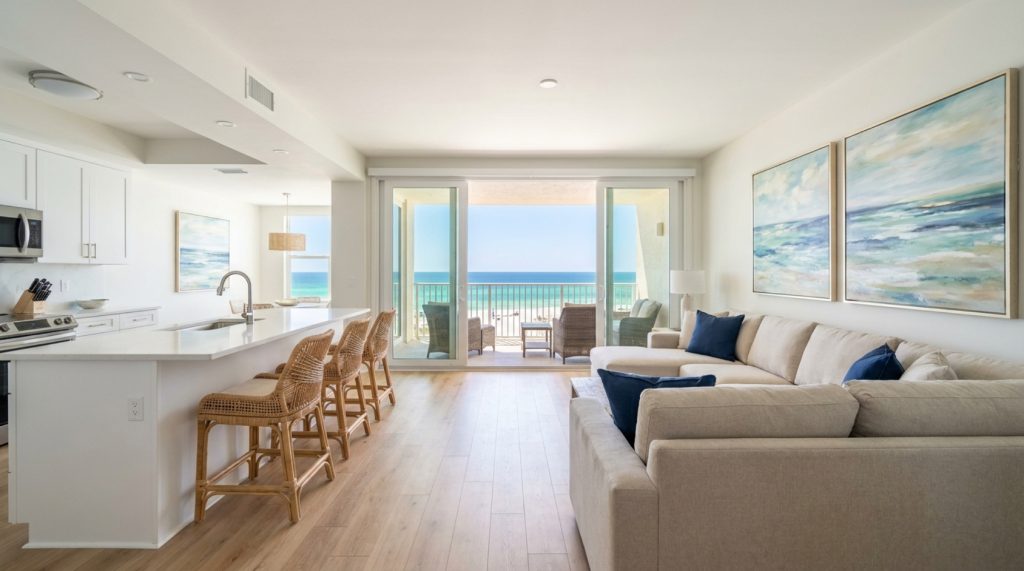
James doesn’t just finance these buildings. He owns them.
He says: “I’m actually a short-term rental condo investor myself. I’ve got four different condotels that I own personally and manage myself.” That means he reads HOA budgets as an owner, not just as a lender, and he attends the association board meetings where reserve contributions and repair plans actually get decided.
“I’m very much involved in the condo scene,” he says, “not just on the lending side, but as an owner and a property manager all at the same time.”
It also means he understands the buyers he works with. Most, he says, are out-of-state investors “that live up north, and they want to have a place down here” near the water, somewhere they “can come to with their family and vacation.” When the family isn’t there, the unit is rented out, “so somebody else is paying for it.”
For those buyers, the 2026 changes cut both ways. More vacation-market buildings may now be eligible for conventional investment-property loans. But the buildings that stay eligible will increasingly be the ones with well-funded reserves, adequate insurance, and clean paperwork — and for Full Review loans with applications dated on or after January 4, 2027, the higher reserve minimum raises that bar.
Before You Make an Offer
James’s advice for buyers boils down to checking the building as carefully as the unit. Before you commit to a condo, especially as an investor, find out:
- How much the association puts into reserves, as a share of its annual budgeted assessment income — and, if you’re planning a conventional loan with an application dated on or after January 4, 2027, whether it meets the new 15% minimum for Full Review.
- Whether there is a reserve study, and whether the budget actually funds its recommendations.
- Whether the association is in any litigation.
- What the master policy’s per-unit deductible is, so you can size your HO-6 policy to match.
- Whether the building offers hotel-style services such as a front desk or a rental program.
- Whether you’re planning a conventional loan or a portfolio loan, and whether your lender offers both.
The answers decide which loans are available before your income or credit score ever comes into it. Ask them before you fall in love with the view.
When Each Change Takes Effect
Every date below refers to the loan application date, not the closing date.
| Applications dated on or after | What changes |
|---|---|
| March 18, 2026 | 50% investor limit retired (investment-property loans, Full Review); waiver expanded to projects of 10 units or fewer; Florida PERS requirement ended; roof replacement-cost and inflation-guard requirements relaxed. |
| July 1, 2026 | Master-policy per-unit deductible capped at $50,000; owner needs an HO-6 policy covering at least that deductible. |
| August 3, 2026 | Limited Review retired; when a lender relies on a reserve study, the budget must include its highest recommended reserve contribution. |
| January 4, 2027 | Minimum reserve allocation rises from 10% to 15% for Full Review loans. |
Frequently Asked Questions
What is the difference between a warrantable and a non-warrantable condo?
A warrantable condo is in a project that meets Fannie Mae's eligibility standards, so a buyer can use a conventional, Fannie Mae-backed mortgage. A non-warrantable condo is in a project that doesn't — for example a condotel, a building needing critical repairs, or one involved in certain litigation — so the buyer needs a lender with its own portfolio loan products. "Warrantable" is industry shorthand; Fannie Mae's term is "eligible."
Did Fannie Mae remove the 50% investor limit for condos?
Yes, for investment-property loans in established projects reviewed under Fannie Mae's Full Review process, effective March 18, 2026. Other limits, such as caps on how many units one owner or entity can hold, still apply.
When does the condo reserve requirement increase to 15%?
For loans reviewed under Full Review with applications dated on or after January 4, 2027, at least 15% of the association's annual budgeted assessment income must go to reserves, up from 10%. An association can instead rely on a reserve study, as long as its budget includes the study's highest recommended reserve contribution.
Can I get a conventional loan on a condotel?
Generally no. Fannie Mae treats projects that offer hotel-type services — such as a registration desk, daily or short-term rentals, or rental pooling — as ineligible. Buyers typically finance condotels with a portfolio lender, sometimes using a DSCR loan that qualifies the property largely on its rental income.
Does Florida still require Fannie Mae PERS approval for new condos?
No. As of March 18, 2026, new and newly converted attached condo projects in Florida no longer have to be submitted to Fannie Mae's Project Eligibility Review Service; the lender can review them under Full Review. Florida's own condominium safety laws are separate and unchanged by this.
What HO-6 coverage do I need if the master policy has a per-unit deductible?
A master policy can carry a per-unit deductible of up to $50,000. When it does, the unit owner needs an HO-6 policy with coverage at least equal to that deductible (or to the interior the master policy doesn't cover, whichever is greater).
Buying a condo in Florida or another vacation market?
Talk to James Mahieu before you make an offer. He finances warrantable and non-warrantable condos and condotels.
Source: Fannie Mae Lender Letter LL-2026-03 (March 18, 2026) and Selling Guide Announcement SEL-2026-07 (August 5, 2026). Dates refer to loan application dates. Guidelines are subject to change, and individual lender requirements may be more restrictive. This article is educational and is not a commitment to lend. James Mahieu, NMLS #199879, Northpointe Bank, NMLS #447490. Equal Housing Lender. Member FDIC.


0 Comments